
Article: L-Screen vs. Z-Screen vs. Sock Net: Choosing the Right Pitching Screen (2026)
L-Screen vs. Z-Screen vs. Sock Net: Choosing the Right Pitching Screen (2026)
Every program eventually needs a pitching screen, but the right shape depends on how you're using it. Live batting practice calls for an L-Screen, fungo and infield work is often better served by a Z-Screen or sock net, and portable field work benefits from a lighter I-Screen. Here's how to tell them apart, plus the accessories worth budgeting for alongside the screen itself.
Pitching Screen Comparison
| Screen Type | Best For | Starting Price |
|---|---|---|
| Web Flex Spider Series 4x7 I-Screen | Lightweight, portable field use | $99.99 |
| Web Flex Spider Series 7x7 Field Screen | General field protection | $99.99 |
| Web Flex Spider Series 7x7 Sock Net Screen | Fungo and infield drills | $99.99 |
| Web Flex Pro 4x7 L-Screen | Live batting practice | $549.00 |
| Web Flex Pro 4x7 Z-Screen | Angled protection, pitcher mobility | $549.00 |
| Web Flex Sports Pro Series 7x7 Field Screen | Heavier-duty field protection | $549.00 |
| Web Flex Pro 9x9 Field Screen | Maximum coverage | $699.00 |
| Web Flex Pro 7x7 Sock Net Screen | Durable fungo/infield net | $699.00 |
| Web Flex Pro 7x7 Softball Pitching Screen | Softball-specific sizing | $599.00 |
L-Screen: Best for Live Batting Practice

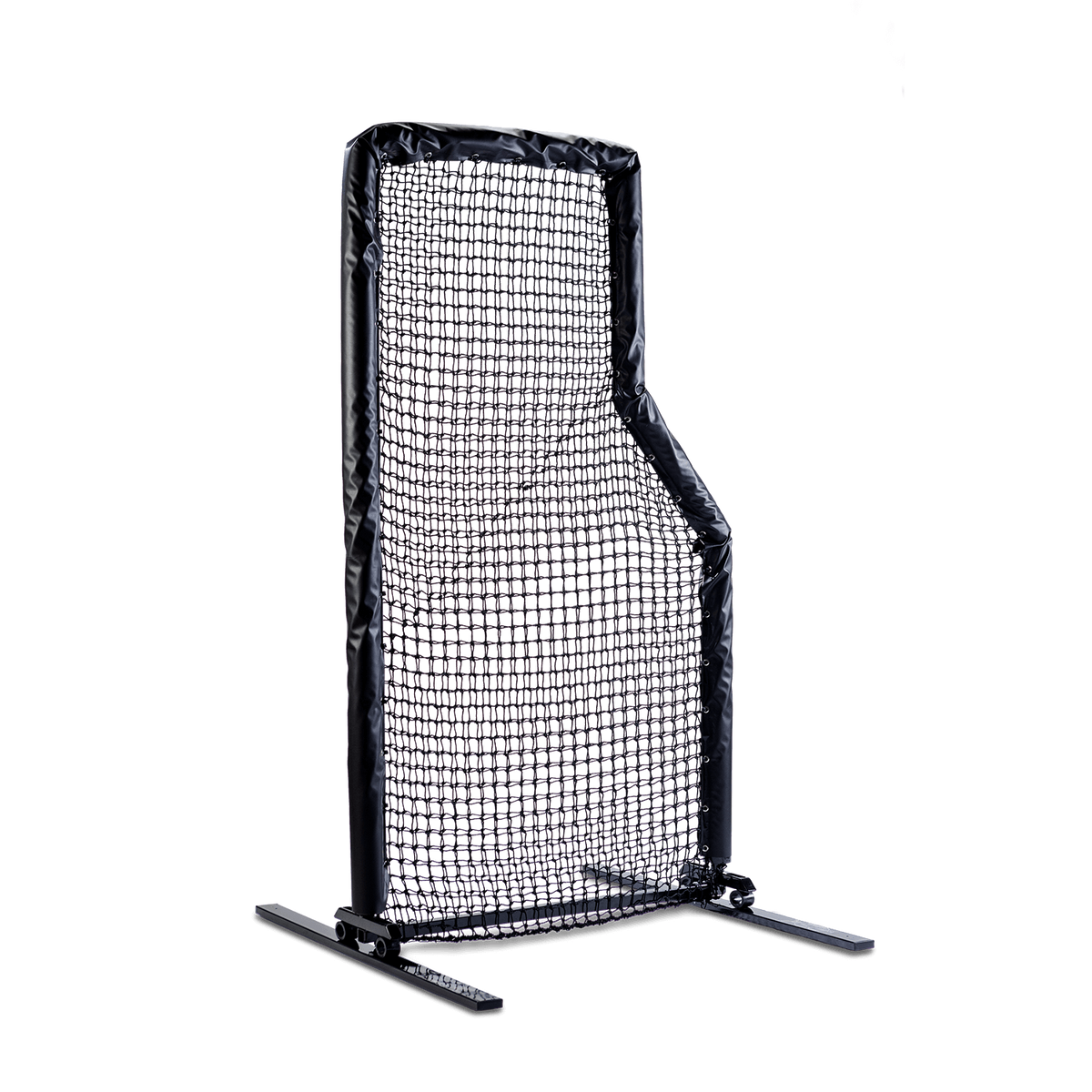
The Web Flex Pro 4x7 L-Screen at $549 is the standard choice for BP — its L-shaped frame protects the pitcher's body while leaving a clear release window.
Good for: live BP where the pitcher needs full protection from line drives back through the box.
Trade-off: larger and heavier to move than a sock net or I-screen.
Shop the Web Flex Pro L-Screen
Z-Screen: Best for Angled Protection

The Web Flex Pro 4x7 Z-Screen is also $549 and offers an angled profile that some pitchers prefer for a clearer sightline while still covering the key impact zones.
Good for: pitchers who want a different sightline than a standard L-screen provides.
Trade-off: shape preference is personal — some coaches find the L-screen protects a slightly wider zone.
Shop the Web Flex Pro Z-Screen
Sock Net Screens: Best for Fungo and Infield Drills

The Web Flex Spider Series 7x7 Sock Net Screen starts at $99.99, with a heavier-duty Pro version at $699. Sock nets are built to catch and hold the ball rather than deflect it, which makes them useful for fungo work and quick infield reps.
Good for: infield/fungo drills where you want the ball contained rather than bouncing back.
Trade-off: not a substitute for an L-screen during live batting practice — different job.
I-Screen & Field Screens: Best for Portability

The Web Flex Spider Series 4x7 I-Screen and 7x7 Field Screen both start at $99.99 and prioritize being lightweight and easy to move between stations.
Good for: programs running multiple stations that need to reposition screens frequently.
Trade-off: lighter-duty construction than the Pro series — better for drill work than sustained high-velocity BP.
Softball-Specific: Web Flex Pro 7x7 Softball Pitching Screen

At $599, the Web Flex Pro 7x7 Softball Pitching Screen is sized and reinforced specifically for fastpitch softball's shorter pitching distance and higher line-drive frequency back at the circle.
Good for: softball programs — the sizing and reinforcement differ meaningfully from baseball L-screens.
Trade-off: baseball programs should use the baseball-sized screens above instead.
Shop the Softball Pitching Screen
Don't Forget the Accessories


A few adds that extend the life of any screen: a transport dolly ($99) for moving screens between fields without dragging the frame, a weatherproof cover ($169.99) for outdoor storage, and replacement netting ($159.99) so a torn net doesn't mean replacing the whole frame.
Shop the Transport DollyShop the Screen CoverShop Replacement Netting
Frequently Asked Questions
What's the difference between an L-screen and a Z-screen?
Both protect the pitcher during live BP, but they differ in frame shape and sightline. The L-screen is the more common standard; the Z-screen's angled design is a matter of pitcher preference.
Can I use a baseball L-screen for softball?
You can, but a softball-specific screen like the Web Flex Pro 7x7 Softball Pitching Screen is sized and reinforced for softball's shorter pitching distance and is the safer choice.
What's the most durable option for daily use?
The Pro series screens ($549-$699) are built with heavier frames and reinforced netting compared to the Spider series entry-level screens ($99.99), and are the better choice for programs running BP daily.
Do I need a dolly?
If you're moving screens between fields or stations regularly, yes — it protects the frame from wear and makes setup faster.