
Article: Can I Fit a Golf Simulator in My Garage? 7 Measurements to Check First
Can I Fit a Golf Simulator in My Garage? 7 Measurements to Check First
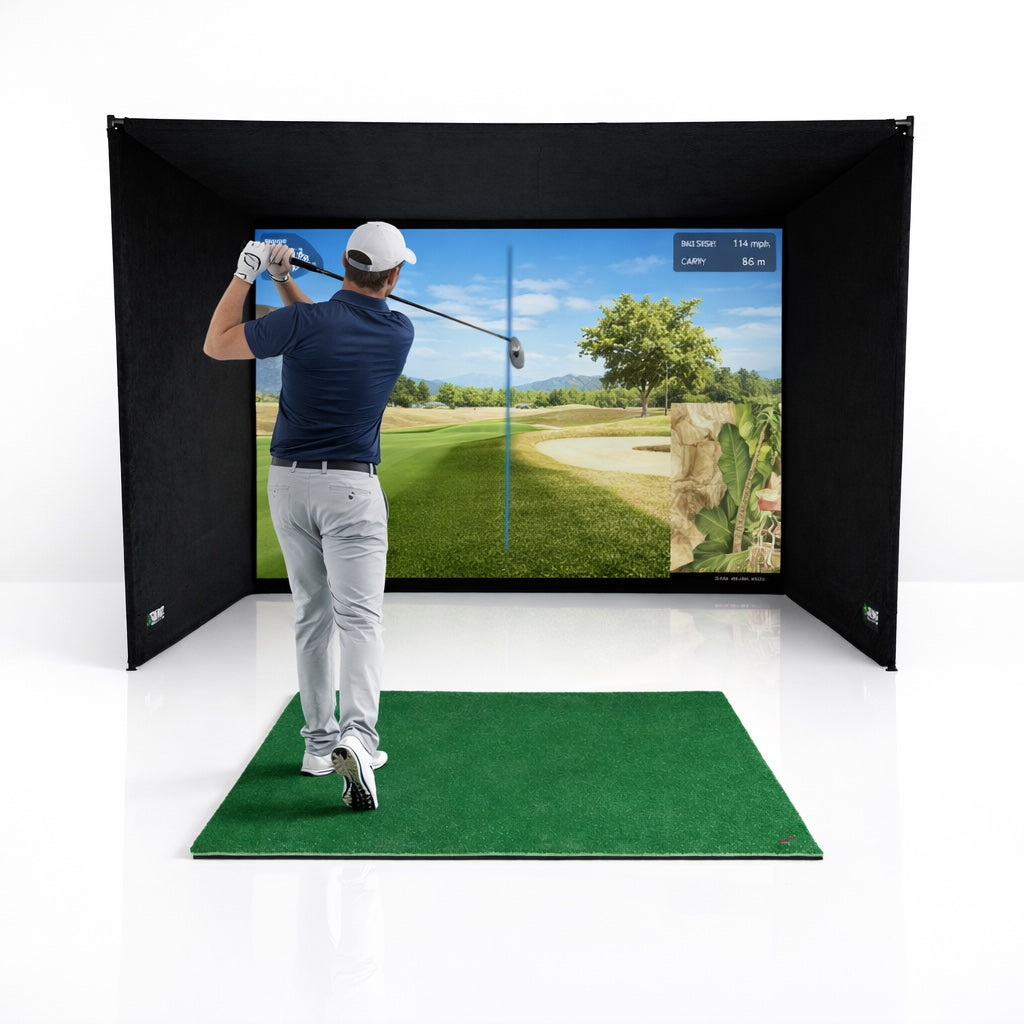
Yes, most garages can fit a golf simulator. A comfortable setup needs a ceiling height of about 9 to 10 feet, a width of 10 to 12 feet, and a depth of roughly 14 to 16 feet from the screen to the back of your hitting area. A standard two-car garage (around 20 by 20 feet) usually clears all three. A one-car garage often works too, as long as the ceiling is high enough for your driver swing. The real question is not "will it fit" but "will I be able to swing freely," because a cramped swing means bad launch monitor data and a frustrating sim.
This guide walks you through exactly what to measure, the common garage obstacles that catch people out, and how to keep room for your car.
In this article
- How much space do you need for a golf simulator?
- How do I measure my garage for a golf simulator?
- What if my garage ceiling is only 8 feet?
- Can I still park my car with a golf simulator in the garage?
- What garage problems should I plan for?
- What equipment works best in a garage?
- FAQ
How much space do you need for a golf simulator?
Here are the numbers most installers and owners work to. "Minimum" means you can make it work with compromises. "Ideal" means everyone in the family can swing a driver without thinking about it.
| Measurement | Minimum | Ideal | Why it matters |
|---|---|---|---|
| Ceiling height | 8.5 ft | 9 to 10 ft | Your driver at the top of the backswing and follow-through |
| Width | 10 ft | 12 to 15 ft | Room to swing, plus space for left and right-handed players |
| Depth (total) | 12 ft | 14 to 16 ft+ | Screen, ball-to-screen gap, your stance, and launch monitor placement |
| Ball to screen | 8 ft | 10 ft | Safety and less bounce-back |
| Behind the ball | 4 ft | 6 to 10 ft (radar units) | Rear radar launch monitors need distance to track ball flight |
A typical two-car garage measures about 20 to 24 feet wide and 20 to 24 feet deep, so width and depth are rarely the problem. Ceiling height is where most garages succeed or fail.

How do I measure my garage for a golf simulator?
Grab a tape measure, your driver, and 10 minutes. Then work through these seven checks.
- Ceiling height at the lowest point. Measure to the lowest obstruction, not the drywall. That is often the garage door track, opener rail, or a light fixture.
- The swing test. Stand where you would hit, take slow, full practice swings with your driver, and have someone watch the clubhead at the top. If you have 6 inches or more to spare, you are good. Repeat for the tallest golfer in the house.
- Usable width. Measure wall to wall at the hitting spot, then subtract shelves, water heaters, freezers, and storage racks.
- Total depth. Measure from the wall where the screen will go to the back wall or garage door.
- The garage door path. If the screen sits near the door, open it and check where the door and track sit when fully raised.
- Outlets. Note where power is for the projector, launch monitor, and PC.
- Floor level. Many garage floors slope toward the door for drainage. A small slope is fine, but you want your hitting mat on the flattest section.
What if my garage ceiling is only 8 feet?
You still have options, but be honest about the trade-offs. If you are under about 6 feet tall, many golfers can swing an iron comfortably under an 8-foot ceiling, and some can swing a driver with a slightly flatter plane. Taller players will usually hit the ceiling with a driver.
- Hit irons and wedges indoors and save the driver for the range. Short game and iron practice is where most strokes are saved anyway.
- Choose a launch monitor that sits on the floor beside you or in front of the ball, rather than one that needs ceiling mounting.
- Protect the ceiling. A foam pelmet along the top of the enclosure catches the occasional thin or skied shot before it reaches drywall or lights.
- Pick a lower-profile enclosure. Some enclosures are built around an 8-foot 2-inch frame for exactly this reason.

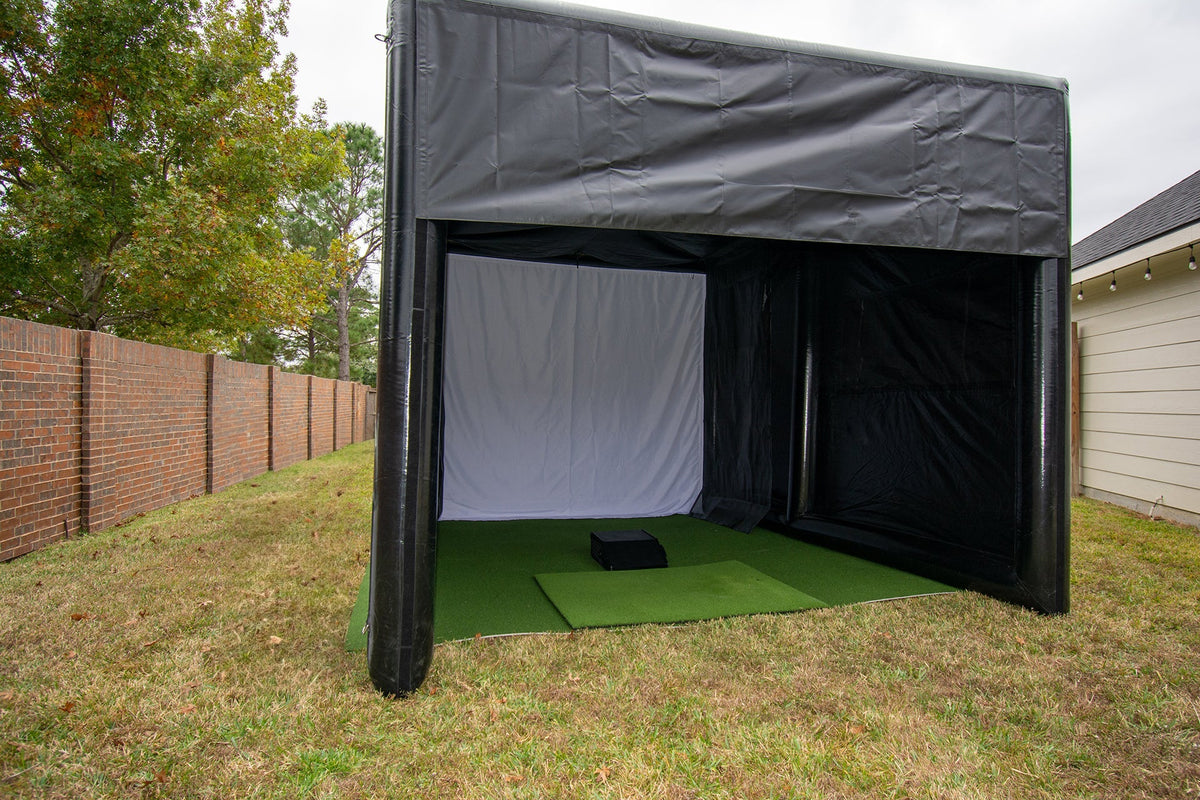
Seven sizes from 8'6" wide, with 8'2" and 9'2" tall frames and under 5 feet of depth. Includes a PRO+ impact screen and side barriers.
Can I still park my car with a golf simulator in the garage?
Often, yes. Plenty of owners keep one bay for the car and one for golf, or set things up so the hitting area clears in a few minutes. The keys are:
- Put the screen against the back wall (the one opposite the garage door), so the car parks in your hitting zone when you are not playing.
- Use a freestanding projector stand instead of a ceiling mount if the projector would sit where the garage door opens.
- Pick a hitting mat you can slide or roll aside. Most quality mats are heavy, so plan where it lives when the car is in.
- Use a floor-based launch monitor you can pick up and store on a shelf.
If you want the car in every night, measure the car's length plus 2 feet, and check it still leaves the depth your enclosure needs in front of it.

Keep the projector out of the garage door's path and move it when the car comes in.
What garage problems should I plan for?
Garages are great sim spaces, but they are not living rooms. Plan for these four things up front.
- Temperature. Cold garages make golf balls feel harder and fly shorter, and projectors and PCs do not love extreme heat or cold. A space heater or insulated garage door makes winter sessions far more pleasant.
- Dust and humidity. Choose a projector with a sealed light engine if you can, and cover electronics when not in use.
- Light. Window light and open doors wash out the image. Blackout panels or simply closing the door during play fixes most issues.
- Concrete floors. Never hit off bare concrete or thin turf. A proper hitting mat protects your joints and gives honest feedback on fat shots.
What equipment works best in a garage?
For most garages, we recommend this order of priorities:
- An enclosure sized to your width and height, so balls are contained and the screen is properly tensioned.
- A quality hitting mat that is kind to your wrists and elbows and lets you hit from both sides.
- A launch monitor that suits your depth. Camera-based units generally need less room behind the ball than rear radar units.
- Protection extras like side barriers and a ceiling pelmet, especially with low ceilings or nearby cars.

A 4' x 9' mat with True Launch footing and a Pure Flight hitting strip, so every golfer in the house can play.

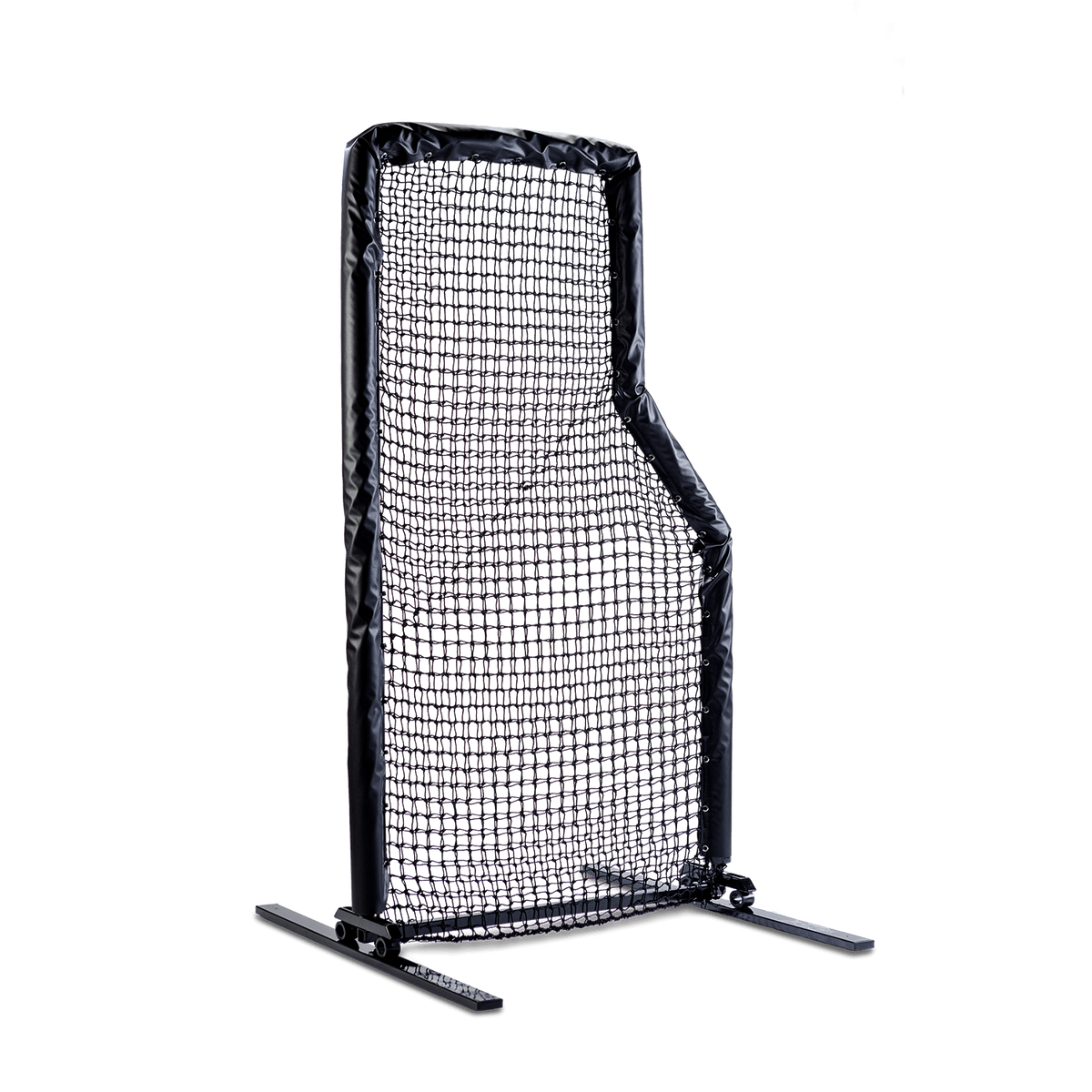
Catches stray high shots before they reach your ceiling, lights, or garage door opener. Sizes from 8'6" to 14'9" wide.
Frequently asked questions
Can you put a golf simulator in a one-car garage?
Yes, in many cases. A one-car garage is usually 12 to 14 feet wide and 20 feet or more deep, which covers width and depth. Check the ceiling height and do the driver swing test before buying anything.
What is the minimum ceiling height for a golf simulator?
Around 8.5 feet is a practical minimum for most adults, with 9 to 10 feet being ideal. Taller golfers and those with upright swings need more. Always measure to the lowest obstruction, such as the garage door track.
Do I need a heated garage for a golf simulator?
No, but it helps. Very cold temperatures reduce ball distance and can affect electronics. A space heater or insulated garage door is enough for most owners to play comfortably all winter.
Is a garage golf simulator worth it?
For golfers who practice regularly or live where winters shut courses, yes. You get year-round practice at home, and a garage keeps the sim out of your main living space.
Can a golf ball damage my car or garage door?
Not with a properly sized enclosure and side barriers. Balls are contained by the screen and netting. Adding a ceiling pelmet covers the rare skied shot.
Not sure what fits your garage?
Send us your ceiling height, width and depth and we will recommend the right enclosure, mat and setup.
Shop garage simulator gear →Questions? Email support@primeathleticsystems.com