
Article: 7 Things Youth Travel Teams Must Know Before Buying a Batting Simulator
7 Things Youth Travel Teams Must Know Before Buying a Batting Simulator
A batting simulator is worth it for a youth travel team when it gets used by 12 to 16 kids, multiple times a week, for years, not just one family's backyard project. Before you sign off on one, the seven things that actually decide whether it pays off are: real cost per rep, video versus wheel-based technology, space and cage requirements, baseball-to-softball crossover, how much use it can survive across a full roster, the safety setup around it, and who on the team is actually going to run and maintain it. Here's what to check on each before the board writes a check.
In this article
- 1. How much does a batting simulator actually cost for a travel team?
- 2. What's the real difference between a video simulator and a wheel-based machine?
- 3. How much space and cage setup do you actually need?
- 4. Will it work for both baseball and softball?
- 5. Can it handle a full roster's worth of reps for a whole season?
- 6. What safety gear does it need around it?
- 7. Who's actually going to run and maintain it?
- FAQ
1. How much does a batting simulator actually cost for a travel team?
The category spans a huge price range, and the number changes depending on what "simulator" means to your team.
- Wheel-based pitching machines (portable, one to three wheel) generally run from a couple thousand dollars up to around $8,000 depending on speed range and pitch variety.
- Coach-style arm and mechanical repeater machines, like an Iron Mike, typically land in the $4,000 to $7,000 range for a complete kit.
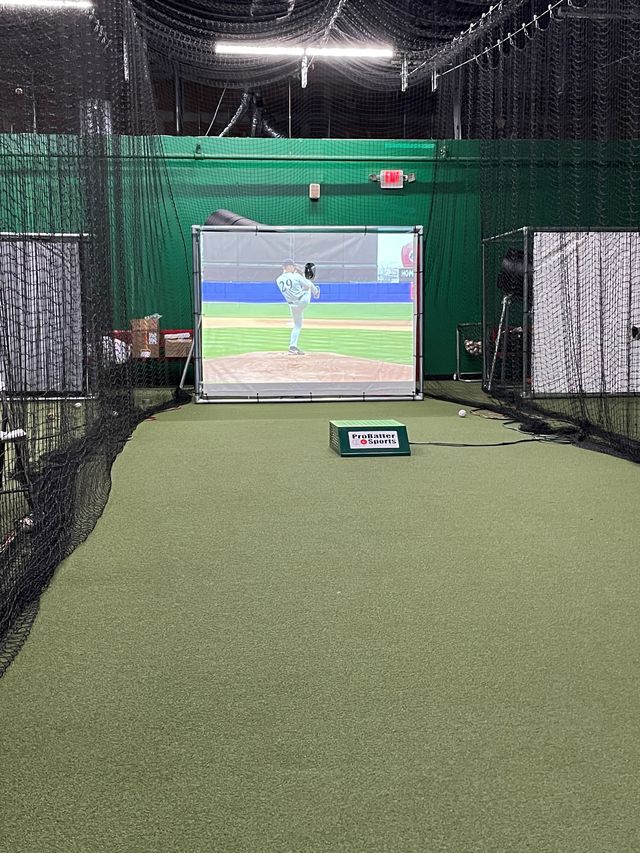
- Video pitch-recognition simulators, like a ProBatter system, are a different category entirely. These project a life-sized video pitcher and are usually a five-figure investment, often landing well into the tens of thousands once you add the enclosure, screen, and install.
Those are typical ranges, not a quote. Every system in this guide is priced for your exact configuration, so treat any number you see online as a starting point for the conversation, not a final figure. You can browse the full range in our baseball pitching simulator collection to compare options side by side.
The number that actually matters for a travel team isn't the sticker price, it's cost per rep across the roster. A $6,000 machine used by 15 kids, three times a week, for three seasons, is a different purchase than the same machine sitting in one family's garage. Before you commit, estimate how many total swings the team will take on it per year and divide the price by that number. It reframes the decision fast.

2. What's the real difference between a video simulator and a wheel-based machine?
This is the decision most boards actually get stuck on, and it comes down to what skill you're trying to build.
| System type | Trains | Best for | Typical cost |
|---|---|---|---|
| Wheel-based machine (e.g. Hack Attack) | Swing mechanics, timing, high rep volume | Everyday BP, younger age groups, mixed skill levels | $2,000 to $8,000 |
| Mechanical arm repeater (Iron Mike) | Consistent, repeatable pitch delivery for drill work | Coaches who want the same pitch, same spot, every rep | $4,000 to $7,000 |
| Video pitch-recognition simulator (ProBatter PX3) | Pitch recognition, timing against a real release point | 13U and up, teams facing real velocity and off-speed in games | Mid five figures and up |
A wheel machine and an Iron Mike both deliver a ball at a known speed from a known point, which is excellent for building a swing. Neither one teaches a hitter to read a release point, which is the actual skill that separates hitters once velocity shows up in real games. A video simulator solves that specific problem because the "pitcher" is a life-sized recorded human, not a wheel, delivering the ball with the same mechanical consistency described in how pitching machines are built to work. If your team's biggest complaint is "our kids look great in the cage and freeze against a real arm," that's a video-simulator problem, not a mechanics problem.
3. How much space and cage setup do you actually need?
Space is the number one thing that gets underestimated before a purchase, not after.
- Length: plan for at least 35 to 55 feet of usable cage length depending on the system, enough for the machine's throwing distance plus a safe backstop behind the hitter.
- Height: most batting cage nets run 10 to 12 feet, which is enough for wheel machines and Iron Mike setups. Video simulators need enough clearance for the screen and projection, so confirm ceiling height indoors before you order.
- Surface: turf or a hitting mat under the batter's box protects the machine's feed mechanism from dirt and inconsistent footing, and it's a small add-on cost compared to the machine itself.
- Indoor vs. outdoor: video simulators are almost always an indoor, enclosed setup because the screen needs controlled light. Wheel machines and Iron Mikes work fine outdoors in a cage or turf tunnel.
If your team shares a facility or rotates between a garage cage and a rented indoor space, measure the tightest space you'll actually use it in, not the biggest one, since that's the real constraint.
4. Will it work for both baseball and softball?
If your organization runs both baseball and softball programs, or your team has a mixed-age group that eventually splits, this question saves a second purchase later.
Not every machine converts. Ball size, speed range, and feed mechanism differ enough between baseball and fastpitch softball that a true crossover system needs a purpose-built conversion kit, not a workaround. Look specifically for a machine listed with baseball/softball conversion kits or a combo unit built to run both from the same base, rather than assuming any machine will "just work" for both.
5. Can it handle a full roster's worth of reps for a whole season?

A machine built for one family's backyard and a machine built for a 15-player roster running three practices a week are not the same product, even when they look similar in a photo.
Ask about duty cycle (how many pitches per hour it's rated for), wheel or arm wear parts and how often they need replacing, and whether the feed mechanism is designed for continuous use or intermittent home use. A junior or entry-level kit is the right call for a smaller group or younger age bracket, and a full commercial-duty kit is the right call once you're running multiple lineups through it every week. Buying below your actual usage is the most common regret teams report after the first season.
6. What safety gear does it need around it?
A pitching machine at travel-team speeds is not a toy, and most youth injuries around machines come from setup shortcuts, not equipment failure.
- L-screen: non-negotiable for anyone feeding the machine, full stop.
- Netting: a full enclosure or cage, not just a backstop, especially with players of mixed experience feeding balls.
- Clear feed routine: a set signal between the feeder and the hitter before every pitch, taught the same way every practice.
- Digital speed control: lets coaches dial in age-appropriate speed instead of guessing, which matters more on a shared team machine than a personal one.
Budget the L-screen and netting into the total cost conversation with your board. They're a small percentage of the overall spend and they're the difference between a safe practice and a preventable injury claim.
7. Who's actually going to run and maintain it?
This is the question travel-team boards skip most often, and it's the one that determines whether the machine is still working in year three.
Decide before you buy: who owns setup and breakdown at each practice, who's responsible for wheel or belt wear parts, who handles software or screen updates on a video simulator, and where it gets stored between seasons. A machine that requires a coach to babysit it every session gets used less than one the whole staff is trained on. If the team is sharing the machine across multiple coaches or even multiple age groups in an organization, put that ownership in writing before the purchase, not after the first breakdown mid-season.

Life-sized video pitchers deliver true-to-speed fastballs, breaking balls, and off-speed pitches, so hitters train timing and pitch recognition against the real thing every rep.

A video-based Hack Attack setup built to run both baseball and softball programs off one machine, ideal for organizations that don't want to buy twice.

A right-sized entry point for younger travel teams or smaller budgets, built on the same trusted Hack Attack platform with a conversion kit included.
Frequently asked questions
Is a batting simulator worth it for a youth travel team?
Yes, if it will be used regularly by the full roster across multiple seasons. The math works when you divide total cost by total swings taken across the team, not by treating it like a single-player purchase.
What's the difference between a pitching machine and a batting simulator?
A pitching machine (wheel-based or arm-style like Iron Mike) delivers a ball at a set speed from a fixed point, which is ideal for building swing mechanics. A batting simulator, like a ProBatter system, projects a life-sized video pitcher so hitters train pitch recognition and timing against a real release point, which is closer to what they see in games.
How much does a youth batting simulator cost?
Wheel-based machines typically run $2,000 to $8,000, mechanical repeaters like Iron Mike run roughly $4,000 to $7,000, and video pitch-recognition simulators start in the mid five figures. Get an exact quote for your team's configuration rather than relying on a general range.
Can one machine work for both baseball and softball?
Some can, but only with a purpose-built conversion kit or a combo unit designed to run both. Don't assume a standard baseball machine converts without checking the specific model.
What safety equipment do we need around a team pitching machine?
An L-screen for whoever is feeding the machine, full netting or a cage enclosure, a consistent feed signal between feeder and hitter, and digital speed control so coaches can set age-appropriate speeds.
How much space do we need for a team batting simulator?
Plan for roughly 35 to 55 feet of usable cage length and 10 to 12 feet of net height for most wheel and arm-style machines. Video simulators need extra ceiling clearance for the screen, so confirm your indoor space before ordering.
Not sure which system fits your roster and space?
Our team will walk through your cage dimensions, roster size, and budget, and help you land on the right setup the first time.
Talk to Our Team →Free shipping on most orders within the continental U.S.